02 - Phreeqc Relationships
A thermodynamic database is a flat file of reactions, and it is hard to see
the shape of one by reading it. This example turns phreeqc.dat into
tables and then draws them, so that the question “what is actually in here,
and how much of it belongs to each element?” has a picture as an answer.
Nothing is simulated. A PHREEQC Database Study reads the database and exposes its contents as ordinary results, which means a database can be queried, filtered and plotted with the same tools as the output of a model run.
The hierarchy
The study’s Relationships table puts each element at the root and, beneath it, every species and phase that contains it.
A species belongs to as many elements as it has, so a species with three elements appears under three roots. That is a deliberate property, not double counting: the question being asked is “what does this element participate in?”, and the answer for CaHCO3+ is that it is part of the calcium chemistry and the carbon chemistry and the hydrogen chemistry at the same time. Read the sizes as reach, not as a partition.
The plots
Both plots draw the same hierarchy; they are worth having side by side because the two shapes answer different questions.
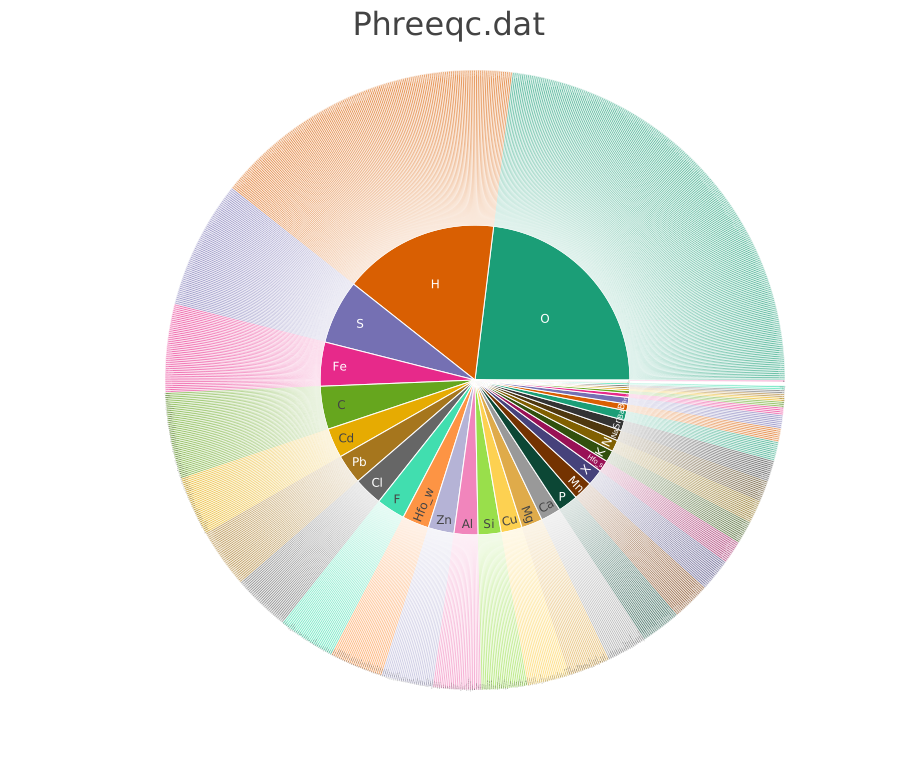
The sunburst: elements in the inner ring, their species and phases in the
outer one. H and O take the largest slices by far, since nearly every
species in an aqueous database contains one or both – which is the shape
of water chemistry rather than a quirk of this database. The metals’
slices are the useful part: they show at a glance which elements
phreeqc.dat describes richly and which it barely describes at all.
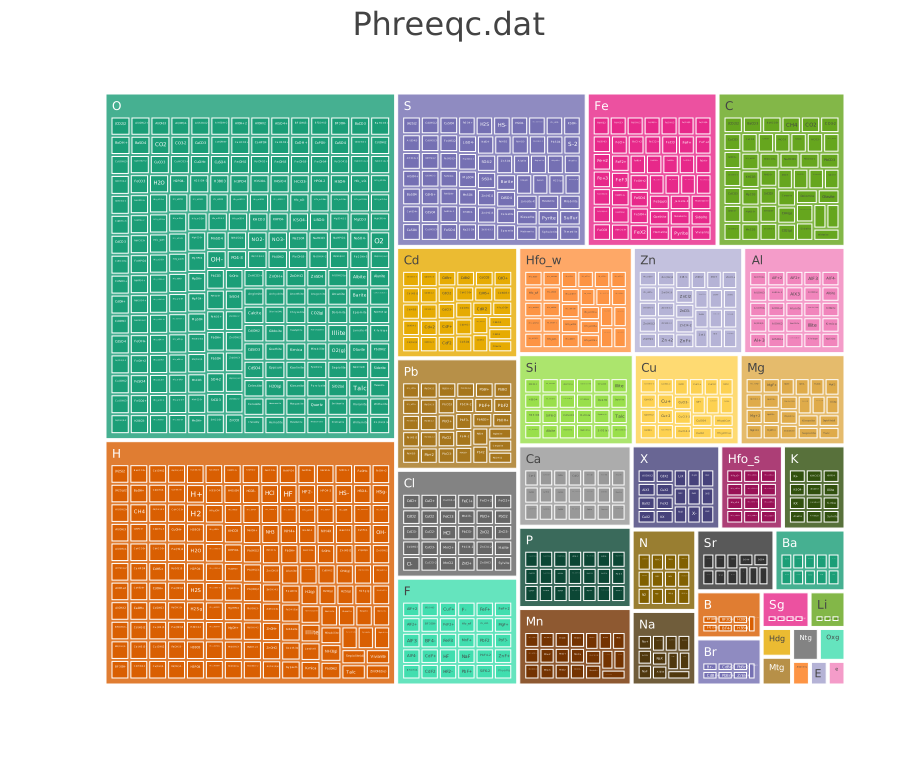
The same hierarchy as a treemap. Area is easier to compare than angle, so this is the one to read quantitatively; the sunburst is the one to read for structure.
What it is for
Knowing the shape of a database is how you form an expectation before a run, and expectations are what make a wrong answer visible. An element with three species in the database will not produce rich speciation no matter what the water contains.
01 - Database Comparison asks the same kind of question across six databases at once, and 03 - Calcite and Quartz in Four Databases compares the constants themselves.
Source
Parkhurst, D. L. and Appelo, C. A. J. (2013). Description of input and examples for PHREEQC version 3. U.S. Geological Survey Techniques and Methods, book 6, chapter A43.
phreeqc.datis PHREEQC’s default database, distributed with it.